

Estimated reading time: 4 minutes
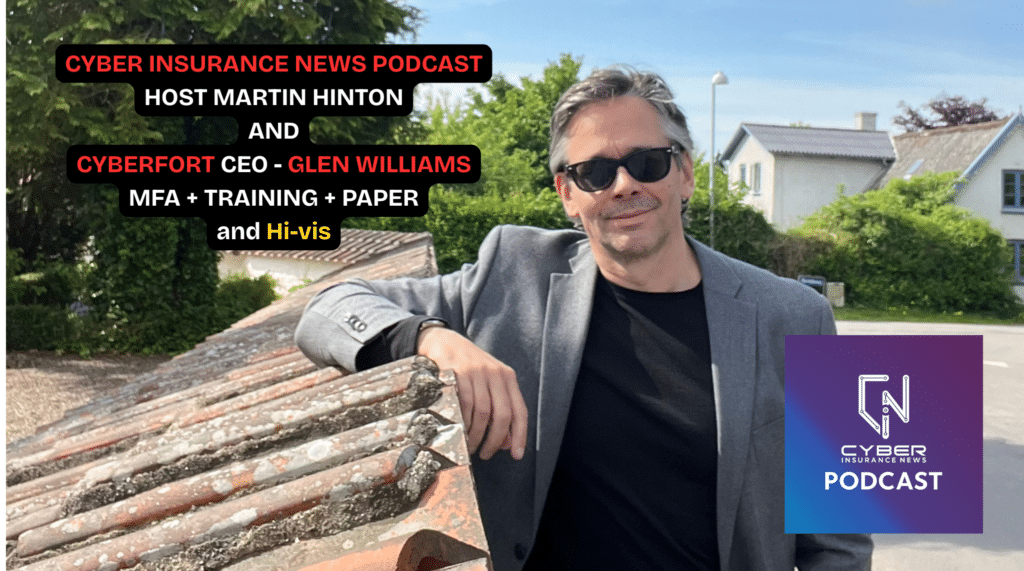
In this new episode of the Cyber Insurance News and Information podcast, executive editor Martin Hinton digs into how real breaches begin and why insurers care. The discussion is practical and fast-moving. It focuses on social engineering, weak assumptions, and the everyday gaps that turn into claims. You’ll hear how simple tactics can beat expensive tools. You’ll also hear why “compliant” doesn’t always mean “secure.” Hinton is joined by Glen Williams, CEO of Cyberfort, a UK-based cybersecurity firm that helps organizations test, monitor, and respond to threats end-to-end.
If you work in cyber insurance, risk, or security leadership, this episode will sharpen your thinking. You’ll want to listen to the full episode. Links below.
Glen starts by pointing out that attackers don’t always use high-tech methods. Sometimes, they just walk in. He shares a scenario: wear a high-visibility jacket, act busy, and carry something that makes you look like you belong. People will often hold doors and avoid asking questions. Security can fail before anyone even uses a computer. The main idea is clear: In the real and digital worlds, people are generally helpful, make quick decisions under pressure, and attackers take advantage of that. If you think your main risk is technical, this episode will make you think again.
Social engineering that feels normal
Martin and Glen dig into the psychology of access. Glen explains how authority signals change behaviour. People default to “helpful.” They also default to “not my job.” Those instincts create gaps that no endpoint agent can fix. The pair tease what good organizations do differently. They also hint at what insurers ask when a claim starts with physical access. You’ll hear ideas you can apply immediately, without buying new tools.
Cyberfort’s “one supplier” approach
Mid-market firms rarely want a patchwork of vendors. They want one accountable partner. Glen describes Cyberfort’s end-to-end model. It starts with assessment and testing. It then moves into managed detection and response. He frames it as a health plan. First, diagnose. Next, treat. Then, monitor for relapse. Martin pushes on what clients actually need, not what vendors like to sell. The episode doesn’t hand you a brochure. It gives you a lens for evaluating services.
24/7/365 and the anomaly mindset
Threats can happen at any time. Glen talks about the need for constant monitoring and being ready to respond right away. He explains that spotting unusual activity is more important than just reacting to alerts. For example, a login at an odd time or from a strange place, or a small change in behavior that could mean something bigger. Glen also points out that while tools are useful, skilled people are still key. Martin looks at what this means for costs, staffing, and what insurers expect. They discuss the trade-offs but don’t reveal every detail.
Get The Cyber Insurance News Upload Delivered
Subscribe to our newsletter!
Compliance isn’t resilience
The episode also looks at a common problem. Certifications can make people feel safe, but they can also hide real risks. Glen talks about the issue of just ticking boxes. He gives an example: a business depends on its website but doesn’t have a good backup plan. Martin connects this to what really happens with insurance claims. After something goes wrong, insurers want to know about recovery steps, not just slogans. The discussion encourages listeners to focus on real resilience and hints that underwriters may soon expect more.
Shadow AI and the data “black hole”
The topic of AI comes up, and the discussion gets lively. Martin points out a risk that many leaders overlook: staff sometimes put sensitive data into tools they can’t control, and that data is then lost from oversight. Glen says every company should have an AI policy now. He also talks about setting rules and using internal methods to lower risk. The goal isn’t to ban AI, but to stop it from causing the next big data breach. If you work with client data, this part is worth hearing.
What you’ll take away
This episode brings together human behavior, security practices, and insurance concerns. It’s practical and helpful, and it will leave you wanting to know more. Listen to the full conversation with Martin Hinton and Glen Williams using the links below.
Get the podcast here and at the links below
Other streaming options
This transcript has been checked for accuracy, but verify elements against the recording to be sure
Related Cyber Liability Insurance Posts
- QR Code Scams Move Off The Laptop And Into Your Pocket
- Fools Rush In – AI Security Lags as Breaches Rise: IBM’s 2025 Data Breach Report
- FAMOUS CHOLLIMA Unmasked: Insights from the 2025 CrowdStrike Report
- Extortion and Ransomware Drive Over Half of Cyberattacks, Microsoft Warns in 2025 Digital Defense Report
- Diversification and Mitigation Slash Cyber Insurance Losses by 60%
