
Estimated reading time: 2 minutes
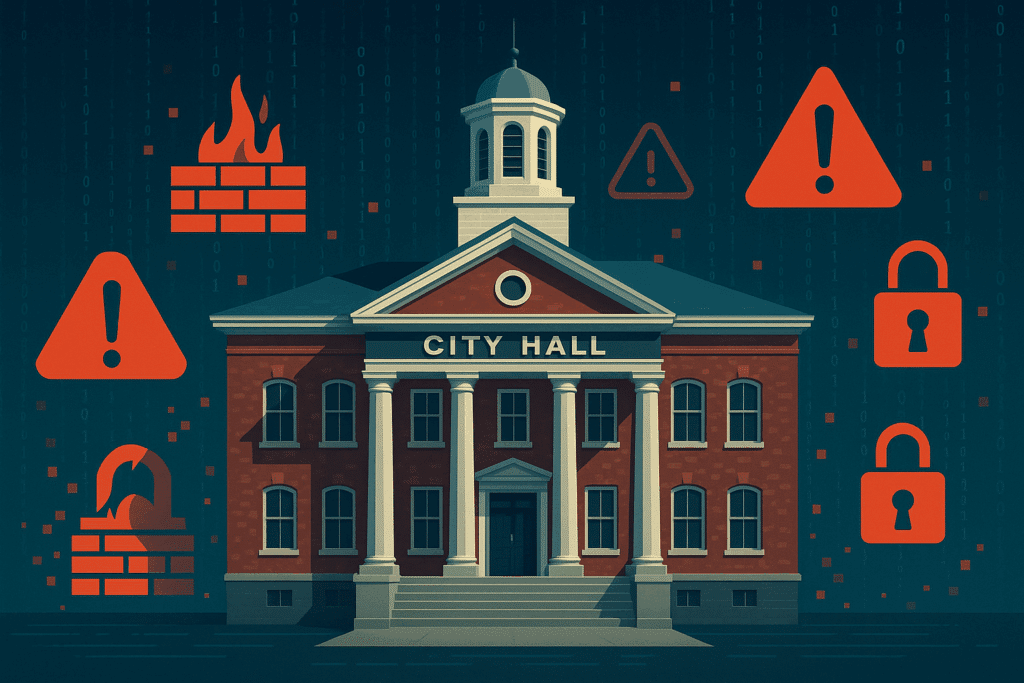
The Vulnerability of Local Government Cybersecurity
INE Security has issued a warning about the rising threat of cyberattacks against local governments. As cities digitize more public services, cybercriminals are exploiting this shift to target critical infrastructure. We’ve reported in the frequency with which K-12 schools need to contact their cyber insurance broker because underfunding in education leaves them vulnerable to cyber threats. Now, towns and cities see their own digital services, such as 911 systems and tax portals, under siege.
DDoS Attacks Grow in Volume and Complexity
INE Security reports a sharp increase in Distributed Denial of Service (DDoS) attacks. These campaigns now feature both large-scale data floods and targeted hits on essential applications. They have taken emergency systems offline, crashed traffic networks, and caused major public service outages across North America, Europe, and Asia.
Warn stated, “We’re seeing a fundamental shift in how attackers think about government targets… now we’re seeing multi-terabit campaigns overwhelming traditional defenses in minutes.”
Legacy Systems and Limited Budgets Increase Exposure
INE describes most municipal IT setups as ill-equipped to counter modern threats. Many local government cybersecurity operations run legacy systems with tight budgets and staff who lack advanced cybersecurity training. According to Warn, “Most municipal IT setups weren’t built for this level of assault.”
Some cities pay ransom to end DDoS attacks quickly. This further drains public resources and increases the costs of cyber insurance.
Training and Early Detection Are Essential
INE urges government IT teams to perform risk assessments and upgrade their defenses. Warn emphasized, “Having IT staff trained in high-level network security expertise is critical.”
Effective defenses rely on layered security, automated threat detection, and rapid response protocols.
Local government cybersecurity demands increased attention and resources, from K-12 schools to tax offices. Warn concluded, “Cities that wait for the first attack to start planning their defense are already behind.”
RELATED NEWS
