
Estimated reading time: 6 minutes
Major UK Firms Face Tidal Wave of Exposed Logins
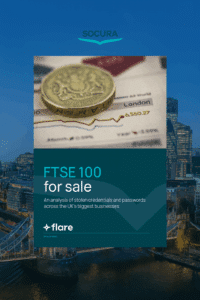
A new Socura report warns that UK blue chips sit on a powder keg of stolen credentials. Researchers found over 460,000 instances of leaked employee logins tied to FTSE 100 corporate email addresses. That number roughly matches the population of Bristol, UK, or Fresno, CA, in the United States.
The study, FTSE 100 for sale, was produced with threat exposure specialist Flare. It comes just days after a UK Government report outlined the huge economic damage caused by cyberattacks. Together, the reports paint a stark picture for boards, regulators, and cyber insurers.
Socura’s team analysed FTSE 100 email domains across both the clear and dark web. They trawled more than 58,000 cybercrime communities and forums. The findings show a thriving underground market where attackers treat usernames and passwords as tradeable commodities.
Socura CEO Andy Kays says the UK’s biggest firms face the same basic weaknesses as any SME. “And the problem is being made worse by the common practice of employees using the same weak passwords for both work and personal accounts,” said Kays. Employees reuse weak passwords, sign up for personal services with their work email addresses, and log in from infected devices.
Stolen Credentials at Industrial Scale
The report highlights a massive spread in exposure across the index. One unnamed FTSE 100 company has around 45,000 credential instances online. Fifteen companies each have more than 10,000 instances.
These are not always unique accounts. Some employees appear in multiple breaches and combo lists. Attackers aggregate these leaks into massive data dumps. They then sell the sets in bulk or carve them up for targeted campaigns.
Financial services firms stand out. Over 70,000 of the leaked credential instances belong to FTSE 100 organisations in that sector alone.
For cyber insurers, this matters. The UK Government’s recent modelling puts the annual national cost of cyber incidents at about £14.7 billion. That equals around 0.5% of GDP. Stolen credentials sit at the front door of many of these incidents.
Infostealer Malware Quietly Harvests FTSE Logins
Combo lists cause headaches, but infostealer malware poses a sharper risk. Socura and Flare found 28,000 instances of FTSE 100 corporate credentials in stealer logs. On average, each listed company has about 280 known stolen credentials from such malware.
Infostealers grab usernames, passwords, and other data straight from infected devices. In many cases, those devices belong to employees, not the company. A senior leader logs in from a compromised home laptop. The malware quietly records every credential and session cookie.
Socura’s threat intelligence lead, Anne Heim, calls cybercriminals “opportunists.” She notes that many attackers would rather buy logins than hack their way in.
Access to an executive inbox can unlock a chain of attacks. An attacker can impersonate leaders, run convincing phishing campaigns, and move laterally into crown-jewel systems. Ransomware and data theft often follow.
Get The Cyber Insurance News Upload Delivered
Subscribe to our newsletter!
Weak Passwords and Football Fandom Fuel Risk
The report shows a depressingly familiar password culture across the FTSE 100. In 59% of companies, at least one stolen account used “password” as its password. Almost half had at least one “Password”.
Other favourites include “123456”, “welcome”, and “Password1”. Many users simply tweak a base word to satisfy complexity rules. That pattern makes guessing easier, not harder.
Football dominates the “Premier League of passwords”. Nine FTSE 100 firms had at least one account using “liverpool”. Arsenal and Tottenham also appear, along with generic choices like “football” and “chelsea”.
One case study shows an employee using several variations of a TV actor’s name. The password appears across six different leaks. This behaviour undercuts the value of forced resets and complexity policies.
For insurers, this confirms a key underwriting concern. Human behaviour still undermines technical controls.
C-suite Exposure and The Dark Credential Economy
The report also tracks how criminals discuss and monetise access. Forum posts in multiple languages advertise “fresh” lists of UK and Irish logs. Sellers quote prices from $10 to $900 per log, depending on value.
Socura’s researchers examined 12 FTSE 100 CEOs and other leaders. They found corporate email addresses and passwords advertised on sites like Doxbin and 4chan. In one case, there is even a potential death threat against a FTSE 100 CEO.
Data from a 2024 third-party breach appears in several samples. Some dumps include job titles, phone numbers, and other personal identifiers. Criminals discuss how to weaponise this data against individuals and major brands.
As one Flare executive notes, “identity is the new perimeter.” Their platform monitors for active leaked credentials and checks if they still work. That enables rapid resets and remediation.
Three Minute Watch – UK Retail Cyber Event | Cyber Monitoring Centre Breaks Down Marks & Spencer Attack
Government Warnings and Insurance Implications
The Socura findings land in the shadow of the UK Government’s latest cyber risk assessment. That study estimates that major cyber incidents cost UK businesses an average of £195,000 each. It also warns that IP theft can pose an “existential threat” to smaller firms.
The government reports one major cyberattack roughly every two days. Essential services, public safety, and consumer access all suffer. Cyber insurers see growing loss trends and systemic accumulation risk.
Against that backdrop, the Socura report shows how easily attackers obtain the keys. Stolen credentials bridge the gap between macro-level risk models and everyday practice. They also clarify why fraud and secondary harms spread far beyond the original target.
Underwriters now need sharper questions on credential hygiene. That includes MFA coverage, password policy enforcement, threat-exposure monitoring, and BYOD controls.
What boards and insurers should push for next
Socura sets out clear steps for organisations facing this wave of stolen credentials.
They urge firms to:
- Enforce strong, modern password policies aligned to NCSC guidance.
- Roll out multi-factor authentication everywhere, favouring passkeys and phishing-resistant options.
- Use conditional access to block logins from risky devices or weak factors.
- Monitor for leaked credentials continuously and reset compromised accounts quickly.
- Tighten BYOD rules and require MFA on any personal device accessing work resources.
- Detect unusual logins and behaviour that may signal infostealer malware.
For cyber insurers, these controls map neatly to coverage conditions and pricing. Policies can reward verified MFA adoption, credential monitoring, and incident response maturity. They can also flag weak password cultures as a clear driver of claims.
Socura’s conclusion: Even the richest UK companies struggle with stolen passwords. Every other organisation should assume exposure and act now.
RELATED CYBERSECURITY AND CYBER INSURANCE POSTS
