

Estimated reading time: 10 minutes
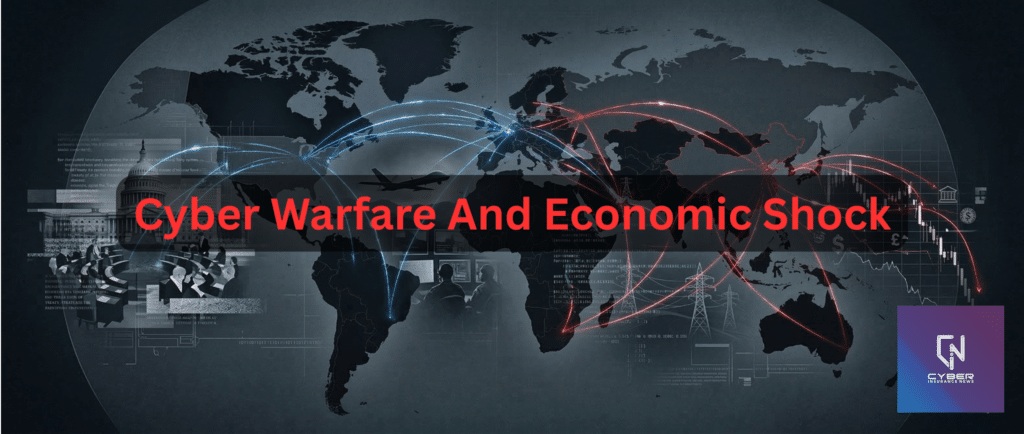
Cyber warfare sits just beyond the traditional edges of the cyber insurance beat, yet its consequences land squarely inside it. Political conflict drives economic disruption. Digital attacks trigger the losses insurers eventually absorb, from business interruption to infrastructure failures and cascading supply-chain damage. Carl von Clausewitz wrote that “war is merely the continuation of policy by other means”. The digital age has bent that logic into a new circle. Politics sparks war. War migrates to networks. Cyber attacks close the loop and spill back into markets, infrastructure, and balance sheets.
That loop comes with a long tail that shapes the modern threat landscape and muddies (even further) the understanding of war exclusions.
The pattern also favors nations with fewer conventional weapons. States without large fleets of aircraft carriers or advanced fighter jets can still project power through cyber operations, drones, and information warfare. Cheap technologies now compete with billion-dollar military platforms.
A new report from Armis Labs argues that cyber warfare has entered a permanent phase of escalation. The firm’s 2026 study, A World Under Pressure: Cyberwarfare in an Age of AI-Fueled Escalation, describes a world where artificial intelligence accelerates digital conflict across governments, infrastructure, and private companies.
“Cyberwarfare is now a constant condition,” said Nadir Izrael, CTO and co-founder of Armis. Attackers operate “at machine speed,” he said, while many organizations still rely on assumptions built for an older threat landscape.
The report surveyed more than 1,900 IT decision-makers worldwide and found growing concern that nation-state actors are weaponizing AI to strike the digital systems that underpin economies and societies. These findings set the stage for understanding how modern battles are no longer restricted to conventional weapons, but are shifting toward more unconventional, asymmetric tools.
The New Asymmetric Battlefield
Modern conflict increasingly rewards asymmetry.
Cyber attacks, drones, and AI-powered strikes let smaller countries challenge stronger militaries without needing the same weapons. Instead of fleets and fighter jets, they use algorithms, malware, and groups of cheap unmanned devices.
The war in Ukraine illustrates the shift. Cheap drones costing hundreds or thousands of dollars have destroyed tanks and equipment worth millions. This reshapes the economics of combat. Analysts describe the phenomenon as the “democratization of air power.” Low-cost, autonomous systems enable smaller forces to strike far beyond their traditional capabilities.
Ukrainian operations demonstrated how inexpensive drone systems can damage high-value aircraft and infrastructure deep inside enemy territory.
The lesson extends far beyond Eastern Europe. Looking back, consider the wars in Iraq and Afghanistan in the context of drones.
Low-cost drones are now transforming warfare globally, diminishing the advantage traditionally held by wealthy militaries with expensive aircraft and advanced weapons systems.
That same dynamic appears across cyber conflict. Malware campaigns and digital espionage cost far less than aircraft carriers or missile systems. Yet they can cause strategic disruption.
For nations that cannot compete with traditional Western military power, cyber warfare provides a powerful counterpunch that they can deploy globally, year-round. This evolving toolkit of digital and autonomous tools merges forms of conflict in ways never seen before, setting up a landscape where drones and digital warfare now converge.
Drones And Digital Warfare Converge
The technological convergence now unfolding across cyber operations, artificial intelligence, and unmanned systems marks a new phase of conflict.
In Ukraine, drone warfare has evolved. From reconnaissance to large-scale precision strikes, the change is dramatic. Low-cost attack drones now target infrastructure, military vehicles, and energy facilities throughout the war.
The trend has expanded into other regions. Iranian-designed drones have appeared in conflicts from Eastern Europe to the Middle East, creating inexpensive long-range strike capabilities for countries that previously lacked them.
That shift now intersects with cyber warfare.

Both domains rely on software, connectivity, and automation. Both exploit vulnerabilities in digital infrastructure. And both allow adversaries to strike critical systems while avoiding direct military confrontation.
The result is a hybrid battlefield where cyber attacks, drone strikes, and disinformation campaigns operate together. This convergence highlights the growing influence of artificial intelligence, which is now rapidly accelerating the scale and complexity of cyber warfare.
AI Accelerates Cyber Warfare
Artificial intelligence now drives the speed and scale of cyber conflict.
Nearly 79 percent of IT decision-makers worry that nation-state actors will use AI to launch more sophisticated cyber attacks, according to the Armis report.
AI systems can automate vulnerability discovery. They can develop exploits. Move laterally across networks. Security researchers see a trend: emerging ‘agentic swarms’ of AI programs scan systems, identify weak points, and even launch attacks with minimal human oversight.
The report warns that AI may soon compress the timeline of cyber intrusions from hours to seconds.
Attackers also use hybrid strategies. AI agents perform reconnaissance and scanning. Human operators execute final objectives inside compromised networks.
The shift transforms cyber attacks from discrete events into persistent campaigns. This ongoing state of vulnerability underscores the urgent need to understand the relationship between geopolitics and digital conflict.
“The technical shift: attacks are no longer events,” the report notes. “They are states of being.”
Geopolitics Fuels The Cyber Conflict

Cyber warfare grows alongside geopolitical tension.
Seventy-eight percent of surveyed IT leaders said global tensions have increased the likelihood of cyber conflict.
Respondents identified familiar geopolitical fault lines. Russia ranked as the most significant perceived cyber threat, followed by China, North Korea, and Iran.
Digital operations increasingly target institutions that shape public trust.
The Armis report predicts an increase in attacks against media organizations and institutions associated with independent thinking. AI-generated disinformation campaigns can manipulate narratives during political crises or elections.
Deepfake videos and synthetic media spread quickly through social networks. These campaigns blur the line between cybercrime and information warfare.
In the cyber domain, perception often becomes the battlefield. A wild twist on the famous Heart line, “You furnish the pictures, and I’ll furnish the war.”
The Readiness Paradox
Despite rising threats, many organizations remain confident in their defenses.
Nearly 79 percent of IT decision-makers say their organizations are prepared for cyberattacks. Seventy-six percent believe they can mitigate AI-driven threats.
Real-world incidents suggest otherwise.
More than half of organizations reported experiencing an AI-generated or AI-assisted cyberattack in the past year. Half said they still failed to adequately secure their environments afterward.
The gap between perceived preparedness and actual resilience continues to widen. As this divide grows, so does the financial toll of cyber conflict on organizations worldwide.
“False confidence absent contextual intelligence is a force multiplier for the adversary,” said Michael Freeman, head of threat intelligence at Armis.
Many organizations still detect attacks only after damage occurs. The report notes that 43 percent respond reactively rather than proactively.
Get The Cyber Insurance News Upload Delivered
Subscribe to our newsletter!
The Growing Financial Cost Of Cyber Conflict
Cyber warfare also carries rising economic consequences.
More than half of organizations now say the average ransomware payment exceeds their annual cybersecurity budget.
Average ransomware payouts in the United States reached roughly $11.6 million in 2025. In Australia, the average payout exceeded $15 million.
Those figures do not capture the full economic impact.
Recovery costs, business interruption, and data restoration often exceed ransom demands by several multiples. Cyber attacks increasingly combine multiple techniques, including ransomware, phishing, credential theft, and supply-chain compromise.
These campaigns can resemble military operations more than isolated crimes.
Cyber warfare slams headlong into the idea of “war exclusions” found in many cyber insurance policies. Those clauses were often built for conventional conflict with clear state actors and visible battlefields. Today’s attacks move through proxies, criminal groups, and AI-driven operations that blur the lines between espionage, cybercrime, and acts of war. The Armis report captures that confusion directly, finding that 64 percent of IT decision-makers say emerging technologies make it harder to distinguish among those categories.
Cyber Warfare As An Always-On Condition
Over the past four years, cyber warfare has shifted from a theoretical risk into a permanent feature of geopolitics.
When Armis released its first cyberwarfare report in 2023, many organizations viewed the threat as distant. A third of companies reported little concern.
Today, the numbers have flipped. Nearly 89 percent of IT decision-makers say they are concerned about the impact of cyber warfare on their organizations.
That change reflects a deeper structural shift.
Cyber warfare now sits at the intersection of geopolitics, technology, and economic security. Conflicts that once unfolded across land, sea, and air increasingly spill into networks and data systems.
The consequences ripple outward.
Cyber attacks disrupt financial markets, paralyze supply chains, and threaten critical infrastructure. Those disruptions eventually end up on corporate balance sheets and in insurance claims.
Clausewitz could not have imagined a battlefield made of code. Yet his logic still applies. Policy drives conflict. Conflict shapes technology. Technology reshapes war.
In the digital age, cyber warfare completes the loop.
Politics leads to war. War leads to cyber attack. Cyber attack returns the damage to the economy.
And the cycle continues.
FAQ – Understanding the 2026 Cyberwarfare Report
Key Findings And Strategic Implications
The report concludes that cyber warfare has become a permanent feature of modern geopolitics. Attacks are no longer isolated events but ongoing campaigns targeting infrastructure, economies, and public trust. Artificial intelligence is accelerating the speed and sophistication of these operations.
Researchers argue that geopolitical tension, rapid AI development, and unresolved security gaps are converging. Together, they create an environment where cyber attacks can escalate quickly and spread across critical systems worldwide.
AI is becoming central to modern cyber operations. According to the report, 79% of IT decision-makers worry that nation-state actors will use AI to develop more sophisticated attacks. AI can automate vulnerability discovery, exploit development, and network infiltration.
Cyber warfare increasingly targets infrastructure that supports daily life. Energy systems, communications networks, financial institutions, and transportation networks are all considered potential targets during geopolitical conflicts.
Cyber operations often involve proxy groups, criminal hackers, and state-sponsored actors working in overlapping networks. This makes attribution difficult and complicates the distinction between espionage, cybercrime, and acts of war.
FAQ: Business Risk, Insurance, And Global Security
More than half of organizations surveyed reported experiencing an AI-generated or AI-assisted cyber attack within the past year. This indicates that AI-enabled threats are already becoming mainstream.
The financial consequences can be severe. The report notes that the average ransomware payout in the United States reached about $11.6 million in 2025, and many organizations say a single ransom payment can exceed their annual cybersecurity budget.
Cyber attacks increasingly cause large business interruptions, infrastructure failures, and financial losses. These incidents often trigger cyber insurance claims and raise questions about policy terms such as war exclusions and nation-state attack coverage.
Critical sectors such as financial services, government agencies, manufacturing, and healthcare face elevated risks. These industries manage large volumes of sensitive data or operate infrastructure essential to economic stability.
The report recommends moving from reactive cybersecurity to proactive exposure management. Organizations should continuously monitor their digital environments, identify vulnerabilities early, and strengthen defenses against AI-driven threats before attacks occur.
Related Cyber Insurance Posts
- Cyber Risk Quantification For Cyber Insurance: Black Kite Adds Open FAIR Assessments
- Why Cyber Insurance Underwriting Is Moving Beyond Questionnaires – NEW PODCAST
- Cyber Insurance in 2025: Costs, Claims, and a New(ish) Playbook
- Non-Human Identity Sprawl Is a Cyber Liability Insurance Problem Now
- NATO’s Cybersecurity Warning: Maritime Ports at Risk as Digital Threats Escalate
