
Estimated reading time: 4 minutes
Report Urges Federal Action Amid Mounting Digital Threats
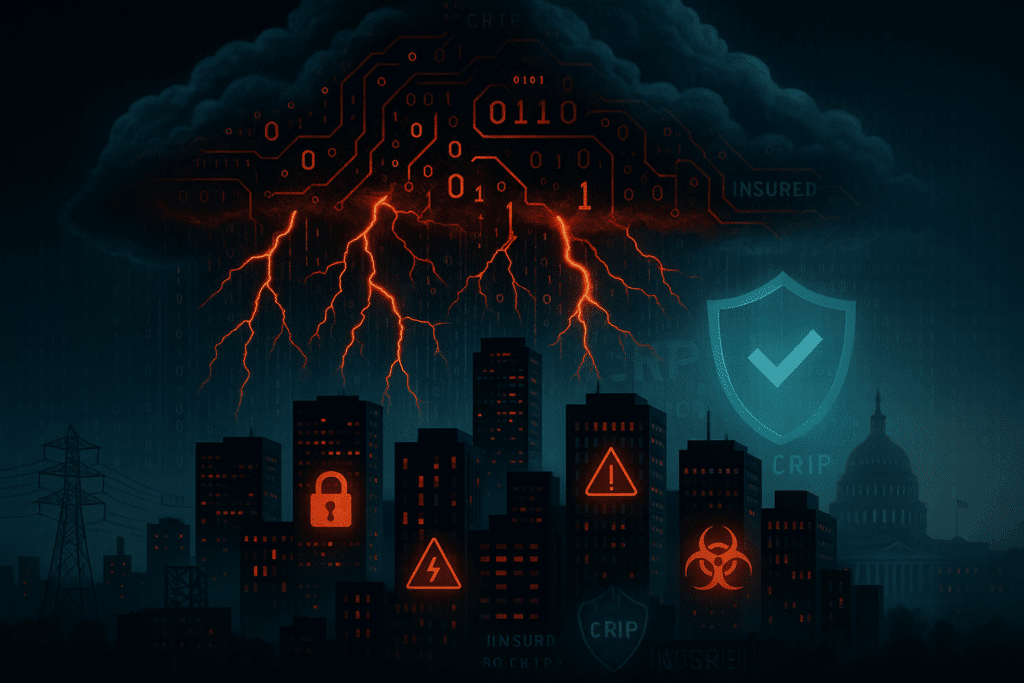
A new RAND Corporation report warns that America’s cyber insurance market cannot absorb the shock of a catastrophic digital attack. The study “Insuring Catastrophic Cyber Risk” provides a roadmap for federal involvement, highlighting structural insurance failures, systemic IT vulnerabilities, and the rising risks of national-scale cyber incidents. As ransomware attacks become increasingly sophisticated and state-sponsored hacking escalates, the report supports the launch of a federal Cyber Risk Insurance Program (CRIP). Without it, the economic fallout from a future cyberattack could spiral the nation into a crisis.
5 Key Takeaways from RAND’s Cyber Risk Insurance Report
1. The Private Sector Cannot Absorb Catastrophic Cyber Losses
What we have come to call routine cyber incidents, such as data breaches or IT outages, are disruptive but have proven to be manageable. But attacks on national critical infrastructure or widely used software platforms could paralyze entire industries. A case in point is the 2024 CDK hack that crippled US car dealers. These systemic risks exceed what private insurers can model or underwrite. RAND finds current insurance policies often exclude such catastrophic scenarios, especially those linked to war or infrastructure failures.
2. A Federal Cyber Risk Insurance Program (CRIP) Could Stabilize the Market
RAND proposes a two-tier federal reinsurance structure to share risk. One tier would cover losses from cyber warfare and infrastructure attacks—largely handled by the government. The other tier would support insurers dealing with high-impact commercial events. This would reduce “tail risk,” free capital, and potentially lower cyber insurance premiums across the board.
3. The Protection Gap is Widening—Too Many Firms Are Uninsured
Due to high premiums and narrow coverage, many businesses either lack cyber insurance or hold insufficient policies. RAND highlights that these gaps are especially dangerous in the context of catastrophic risks. CRIP would be designed to expand access and affordability, helping close the protection gap and improving national resilience.
4. Better Data Collection is Crucial to Understanding Cyber Threats
A key feature of RAND’s proposed solution is mandatory data reporting. Insurers participating in CRIP would report claims and incident data, improving transparency and helping model emerging threats. Without comprehensive data, risk modeling for catastrophic events will remain inadequate.
5. Federal Involvement Can Improve Economic Recovery and National Security
RAND asserts that cyber risk is no longer just a business concern—it’s a national security issue. A government-supported insurance backstop would not only prevent market collapse after a major event but also help companies recover faster, maintain services, and preserve jobs. This public-private model mirrors terrorism insurance frameworks and would provide critical systemic stability.
Cyber Insurance News Editorial: A Call We’ve Already Made
Earlier this year, we published an editorial titled “The Looming Global Cyber Crisis.” In the article, we warned that state-sponsored hacking threats, critical infrastructure vulnerabilities, and market exclusions were a recipe for disaster. Our editorial stated, “The next war will not rely solely on bombs and bullets; nations will wage it through cyberattacks. It’s imperative we act now.”
The RAND report validates those concerns, particularly regarding insurance shortfalls for events such as catastrophic cyber attacks or coordinated ransomware campaigns.
Get The Cyber Insurance News Upload Delivered
Every Sunday
Subscribe to our newsletter!
RAND’s Conclusion: Delay Will Lead to Disaster
RAND’s final verdict is unambiguous: the federal government must act. A well-structured CRIP would provide a long-overdue response to a risk that has outgrown private capabilities. Even under RAND’s model, most historical cyberattacks wouldn’t trigger federal payments—proof that this is not a bailout but a risk-mitigation mechanism.
RELATED NEWS
