
Estimated reading time: 5 minutes
The Unseen Threat to Small and Mid-Size Businesses –
Cyber threats affect every business, no matter its size. Yet many small and mid-size businesses underestimate the risks. They often delay taking preventive actions, assuming cyberattacks only target large corporations. This false sense of security can leave them exposed to serious financial and operational damage.
The Current State of Cyber Resilience in SMBs
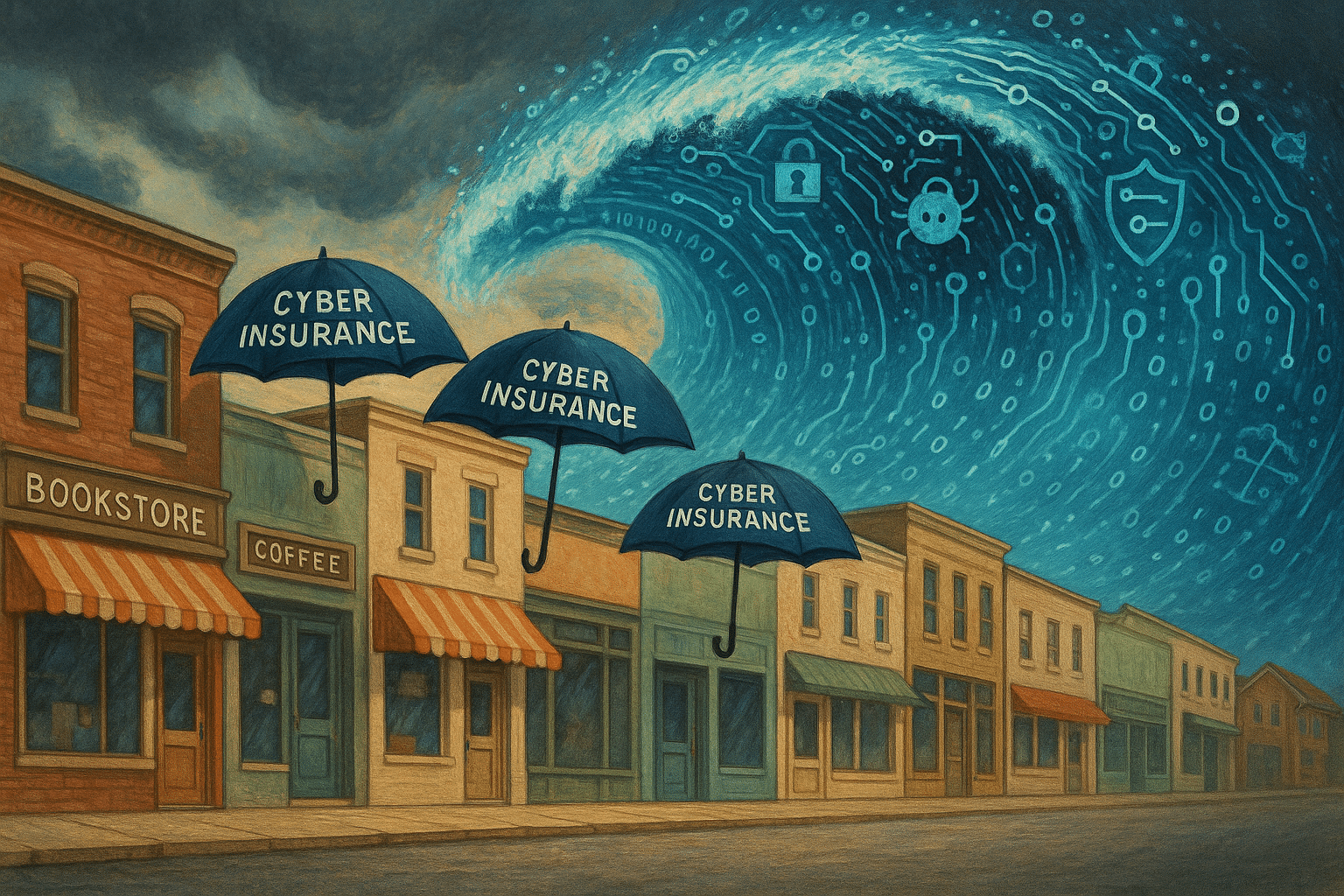
According to a recent HSB survey, only about half of small business owners carry cyber insurance—the lack of coverage is due to a range of factors. Many cite cost, confusion, or lack of knowledge as reasons for skipping coverage. These are understandable barriers, but as threats become increasingly common and sophisticated, greater cyber resilience via tools like insurance is no longer optional. Like an umbrella, cyber insurance can’t keep you entirely dry when the storm hits, but having one can make the difference between a minor annoyance and becoming drenched.
Why Cyber Insurance is Crucial
Evolving Threat Landscape for Businesses
Cybercrime is no longer limited to data breaches. Attackers now target all levels of business operations, from customer invoices to employee email accounts. Even a brief disruption can cripple a business’s reputation and cash flow.
Real-World Consequences of Cyber Attacks
Without insurance, recovering from a cyberattack is, quite simply, harder. Consider the Marks & Spencer hack that occurred earlier this year. Some expect that the UK retailer, with hundreds of millions in coverage and an 80-person cybersecurity team, will need years to recover completely. For small businesses, legal costs, forensic investigations, system restoration, and regulatory fines can destroy a company’s finances. Cyber insurance offers a safety net when digital defenses are breached.
Check out our Small Business Cyber Targets Podcast | Dan Candee on Cyber Resilience & AI |
Common Cyber Risks Faced by SMBs
Phishing and Ransomware
Phishing emails are a common entry point for cyberattacks. Once inside, attackers can deploy ransomware that locks files until a ransom is paid.
Cryptojacking and Impersonation Fraud
Cybercriminals also hijack company systems to mine cryptocurrency—a tactic called cryptojacking. Impersonation fraud is another risk, where attackers pose as executives or suppliers to steal money.
Invoice and Executive Fraud
Fraudsters may alter invoices or mimic executive emails to divert funds. These subtle attacks often bypass traditional security systems.
90 Second Watch – Small Business Cyber Insurance – 5 Must Know Facts
The Cyber Insurance Gap
Survey Insights from HSB and Harris Poll
The gap in cyber insurance coverage is stark. Only 27% of micro businesses (5 or fewer employees) have cyber insurance. In contrast, 60% of small businesses (6-50 employees) and 79% of mid-size firms (51-500 employees) are covered.
Cost, Complexity, and Awareness: Core Obstacles
When asked why they didn’t have coverage, 30% of business owners said it was too expensive. Another 26% didn’t know it existed. Some were unsure where to buy it, and others found the policies too confusing.
HSB’s Role in Bridging the Gap
The Launch of the Updated HSB Cyber Suite
In response, HSB has introduced a revamped Cyber Suite. Designed for small and mid-size businesses, it simplifies cyber insurance and lowers the cost barrier.
“It doesn’t matter if a business has five or five hundred employees,” said James Hajjar, Chief Product and Risk Officer at HSB. “Every organization deserves comprehensive cyber insurance.”
Key Features of the New HSB Cyber Suite
Executive Computer Fraud Coverage
Protects against schemes where criminals gain access to executive-level systems and authorize fraudulent transfers.
Business Identity Theft Liability
Covers legal and recovery costs when a business’s identity is used to commit fraud.
Cryptojacking and Impersonation Protection
Helps businesses recover from cryptojacking attacks and impersonation-based fraud.
Invoice Manipulation Coverage
This shields businesses from financial losses due to tampered invoices and payment instructions.
The Micro Cyber Advantage
Addressing the Needs of Micro Businesses
HSB has introduced “Micro Cyber”—a simplified product tailored for businesses with fewer resources and low cyber exposure.
Coverage Highlights for the Underserved
Micro Cyber includes protection for:
- Computer attacks
- Data breaches
- Identity theft
It’s ideal for startups and solo entrepreneurs who need affordable, meaningful protection.
Get The Cyber Insurance News Upload Delivered
Every Sunday
Subscribe to our newsletter!
How HSB Helps Insurance Partners
Bundling Made Easy for Carriers
The Cyber Suite can be bundled with existing small business insurance packages. This makes it easier for insurers to offer comprehensive coverage.
Tailored Limits and Threat Monitoring
Partners can customize coverage limits and add active threat monitoring services for clients.
Round-the-Clock Support and Cyber Experts
HSB’s in-house cyber experts are available 24/7. They assist with claims and guide businesses through the response and recovery process.
The Future of Cyber Resilience for SMBs
Trends to Watch
Cyberattacks are evolving rapidly. Businesses should stay informed and regularly update their protection strategies.
Why Proactive Protection Matters
Preventive action today can save thousands—or even millions—in future losses. Insurance is a critical part of that plan.
Strengthening SMB Resilience in the Cyber Age
Cyber threats are real, growing, and increasingly targeting smaller businesses. Many remain uninsured due to outdated assumptions or a lack of awareness.
RELATED NEWS
