
Estimated reading time: 5 minutes

Time off can be a gift—when it’s planned. But when work screeches to a halt because of a disruptive cyber event, the losses are more than just productivity. A new report from QBE Insurance reveals that 1 in 7 businesses suffered an unplanned business interruption of one working day or more in the past 12 months. For many, that downtime came without warning, eroding revenue and highlighting the fragility of modern digital infrastructure.
Business Interruption: The Hidden Cost of Every Cyber Event
In a study of 3,600 mid-sized companies across nine Western countries, more than half (52%) reported experiencing at least one cyber event in the past year. Among these, 14% said the incident halted operations for at least a day. These are not minor glitches—they’re full-stop moments that ripple through customer service, logistics, finance, and trust.
Supply Chain Risk Amplifies Cyber Vulnerabilities
The research found that 59% of attacks were tied to weaknesses in the supply chain. As businesses become more interconnected, the risk exposure multiplies. Even if a company maintains strong cybersecurity, the lapse of a third-party vendor can bring everything to a standstill.
“If one of their suppliers has a vulnerability, it will likely affect them,” noted Serene Davis, QBE’s Global Head of Cyber. “Due diligence is absolutely crucial.”
Charts Reveal a Sharp Increase in Major Cyber Events
- Significant cyber incidents rose 42% in Europe and North America from 2023 to 2024.
- Globally, disruptive attacks doubled from 103 in 2020 to 196 in 2024.
- Projections estimate that number will grow to 233 by end of 2025.
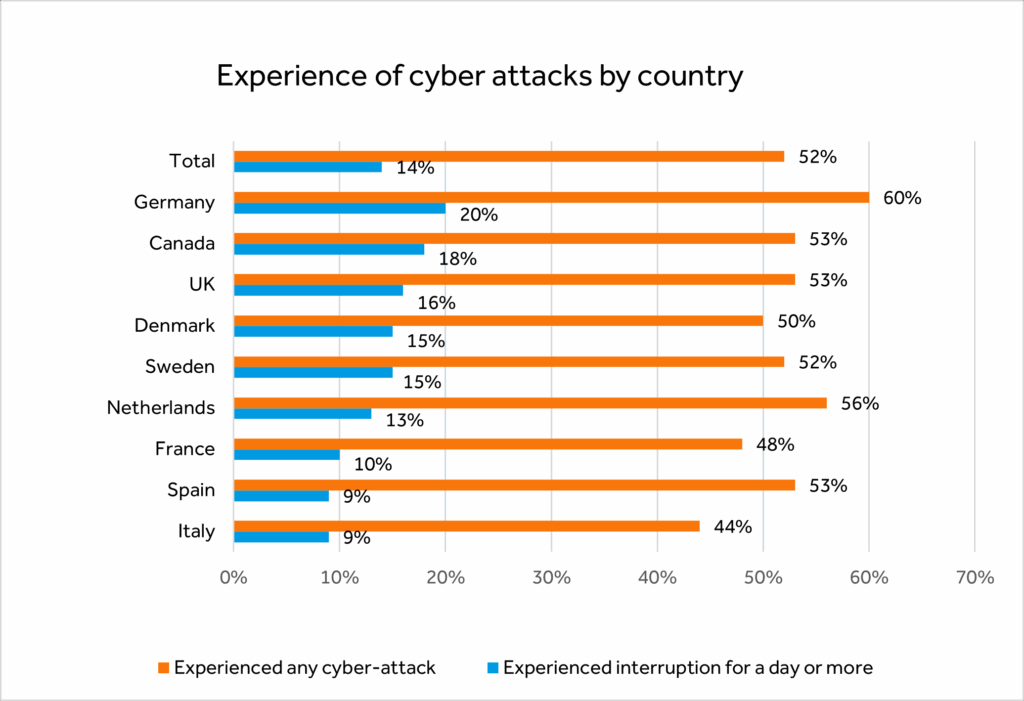
These spikes are fueled by growing geopolitical tensions—particularly those involving Ukraine—making certain countries, like Italy, Poland, and Germany, key targets for cybercriminals and hacktivists.
Financial Fallout: Revenue Loss and Trust Erosion
Among those affected, 49% reported a direct loss of revenue following the incident. While some losses are immediate (missed sales, delayed deliveries), the longer-term impact—like reputational damage or lost clients—can be harder to measure but no less real.
Cybersecurity Concerns Growing—But Budgets Lag Behind
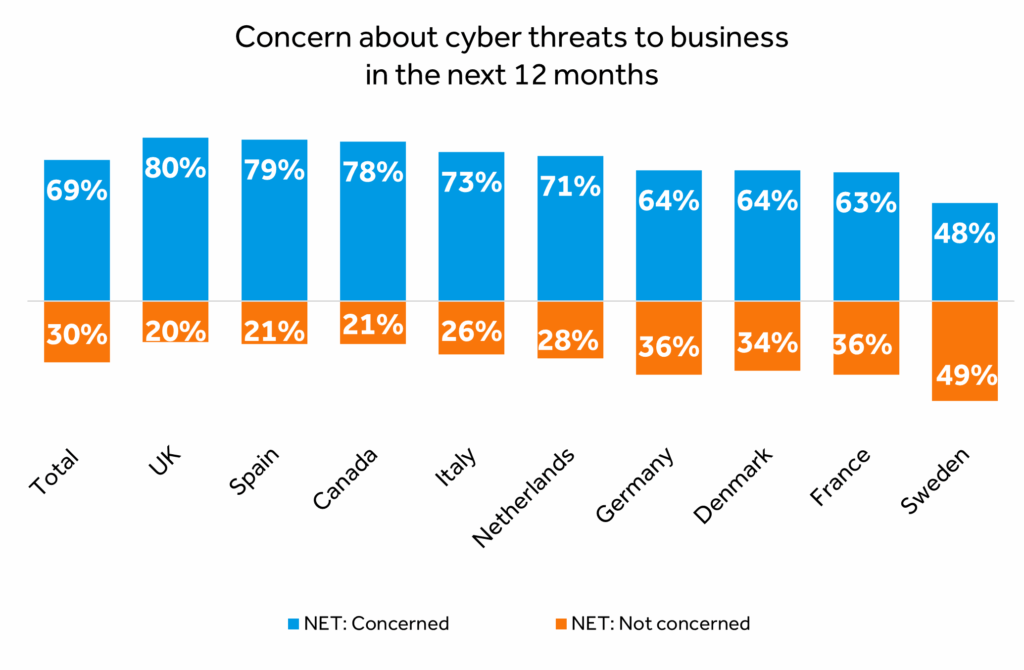
Despite these findings, not all businesses are responding with urgency. While 69% expressed concern about their future exposure to cyber threats, only 33% plan to boost their cybersecurity budgets beyond inflation.
- Spain leads in proactive investment, with 44% of businesses increasing real-term budgets.
- In contrast, countries like Sweden, where 49% of companies report little or no concern, risk underestimating the threat.
Cyber Insurance Uptake Remains Inconsistent
Currently, 65% of firms have cyber insurance, with the highest coverage in the UK (77%) and the lowest in Sweden (55%). The gap suggests a disconnect between risk awareness and risk management, particularly in markets that have not yet been directly impacted.
AI: Both Weapon and Shield in the Cyber Battlefield
Generative AI (GenAI) is a double-edged sword. On the one hand, cybercriminals are exploiting it—with 10% of successful attacks using deepfakes expected in 2024. On the other hand, companies are adopting AI to bolster their operations.
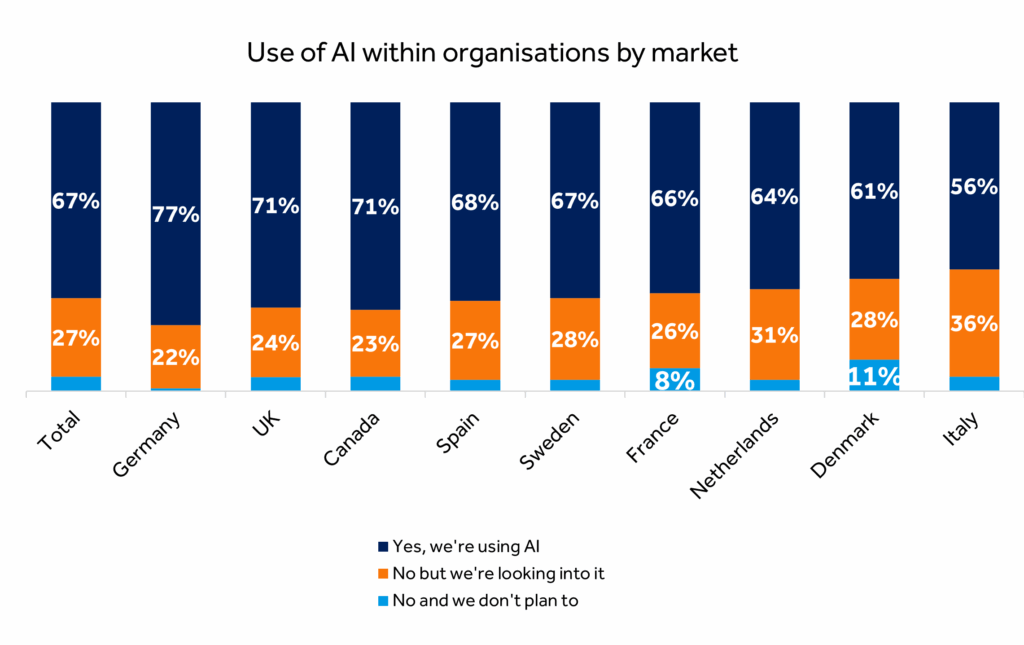
- 67% of firms already use AI, with adoption highest in Germany (77%) and lowest in Italy (56%).
- Sectors leading AI use: computing (79%), tech-media-telecom (75%), and finance (71%).
Despite the risks, 86% of businesses believe that AI will benefit their economy, and 86% say it will help their company, primarily through increased efficiency, innovation, cost reduction, and improved customer service.
Geopolitical Conflict Drives Regional Vulnerabilities
Countries supporting Ukraine or participating in European security efforts are being heavily targeted. Italy, France, the Netherlands, Spain, and Germany all reported year-over-year increases in cyber incidents of nearly 50%.
The types of attacks range from:
- Ransomware
- DDoS (Distributed Denial of Service)
- Hack-and-leak campaigns
- Website defacement
These techniques are used not just to disrupt business but also to spread fear and sow political discord.
Get The Cyber Insurance News Upload Delivered
Every Sunday
Subscribe to our newsletter!
Conclusion: Preparation Must Replace Complacency
The data tells a clear story—cyber events are increasing, diversifying, and becoming more damaging. Unplanned downtime isn’t just an IT issue; it’s a business continuity threat that affects finance, operations, and long-term strategy.
Time off when expected is rejuvenating. Time off due to a ransomware lockout? Disruptive and expensive. With one in seven firms losing a full day or more, companies must adopt a zero-trust mindset, vet suppliers, invest in cybersecurity, and consider cyber insurance a baseline, not a luxury.
RELATED NEWS
