
Estimated reading time: 4 minutes
Cyber insurance is changing fast, and carriers now expect real, working security controls, not just promises on a form. Miss a baseline like MFA or patching, and a single breach can turn into a denied claim plus weeks of downtime. This guide breaks down the seven requirements most insurers look for and shows what happens when they’re skipped. Use it to check your gaps, protect your renewal, and reduce the impact if an attack hits.
1. Multi-Factor Authentication (MFA) Everywhere
Insurers demand it. Email. Accounting. Every account.
Why? Because stolen passwords are hacker gold. One leaked login could sink your whole system and your cyber insurance claim. Turn on MFA. Keep proof. No excuses.
2. Patch. Patch. And Patch.
Outdated software is an open door. Hackers love it.
Insurers want receipts, proof you’re updating fast. Automatic updates. Patch logs. No lag. Miss one? Your cyber insurance coverage could vanish.
3. Go Beyond Antivirus with EDR
Antivirus alone is dead weight.
Cyber insurance providers want Endpoint Detection and Response (EDR). Think of it as a 24/7 guard dog. It catches weird activity before it explodes.
4. Encrypted Backups or Bust
Firewalls won’t save you from one bad click.
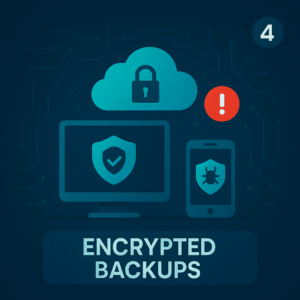
That’s why insurers insist on encrypted backups. Onsite. Cloud. Both. Tested. Verified. Lose your data without them? Don’t expect your cyber insurance to pay out.
5. Train Your People. Or Pay the Price.
Your team is either your shield or your weakest link.
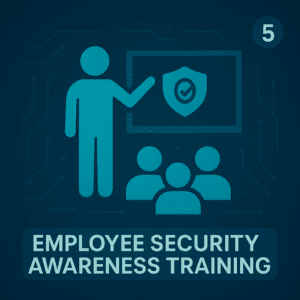
Insurers know most breaches start with a dumb click. They want documented cybersecurity training. Regular. Realistic. Phishing drills. Scam spotting. Smart employees = lower risk.
6. Incident Response Plan, In Writing
Chaos kills.
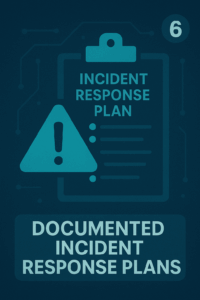
Cyber insurance providers want proof you’ve got an IR plan. Who to call. How to contain. How to recover. Test it before disaster hits. Show insurers you mean business.
7. No Zombie Operating Systems
Old software? Big no.
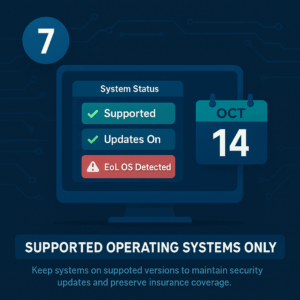
Consider this: in October, Microsoft drops security updates for legacy systems. Will running these systems be considered negligence by your insurer? All your systems should be getting security updates.
You can’t stop every threat, but you can control your readiness. Enforce MFA everywhere, patch on schedule, deploy EDR, encrypt and test offsite backups, train your people, practice your incident response, and retire unsupported systems. Document each control, keep proof, and review it with your broker and IT team before renewal. Do these seven things well and you’ll strengthen cybersecurity, speed recovery, and keep your cyber insurance working when you need it most.
RELATED POSTS
